Introduction
Every gardener needs tools, yet beginners often waste money on expensive sets they don’t need. You need a few quality basics, not every gadget available. This guide walks through essential gardening tools, specialized equipment for specific tasks, quality considerations, maintenance, and storage. The goal is helping you build an effective tool collection without overspending or buying things you’ll never use.
Good gardening tools are investments lasting years. A $30 spade used weekly for ten years costs three cents per use. Cheap tools break, leaving you frustrated and replacing them. Invest in quality basics rather than accumulating junk.
Essential Hand Tools
Spade
A spade (flat-edged, not a shovel) is your foundation tool. Use it for digging, edging, and turning soil. A quality spade with a long handle costs $30 to $50 and lasts decades. Cheap spades bend or break easily. Quality matters—you’ll use this tool hundreds of times.
Hand Shovel and Trowel
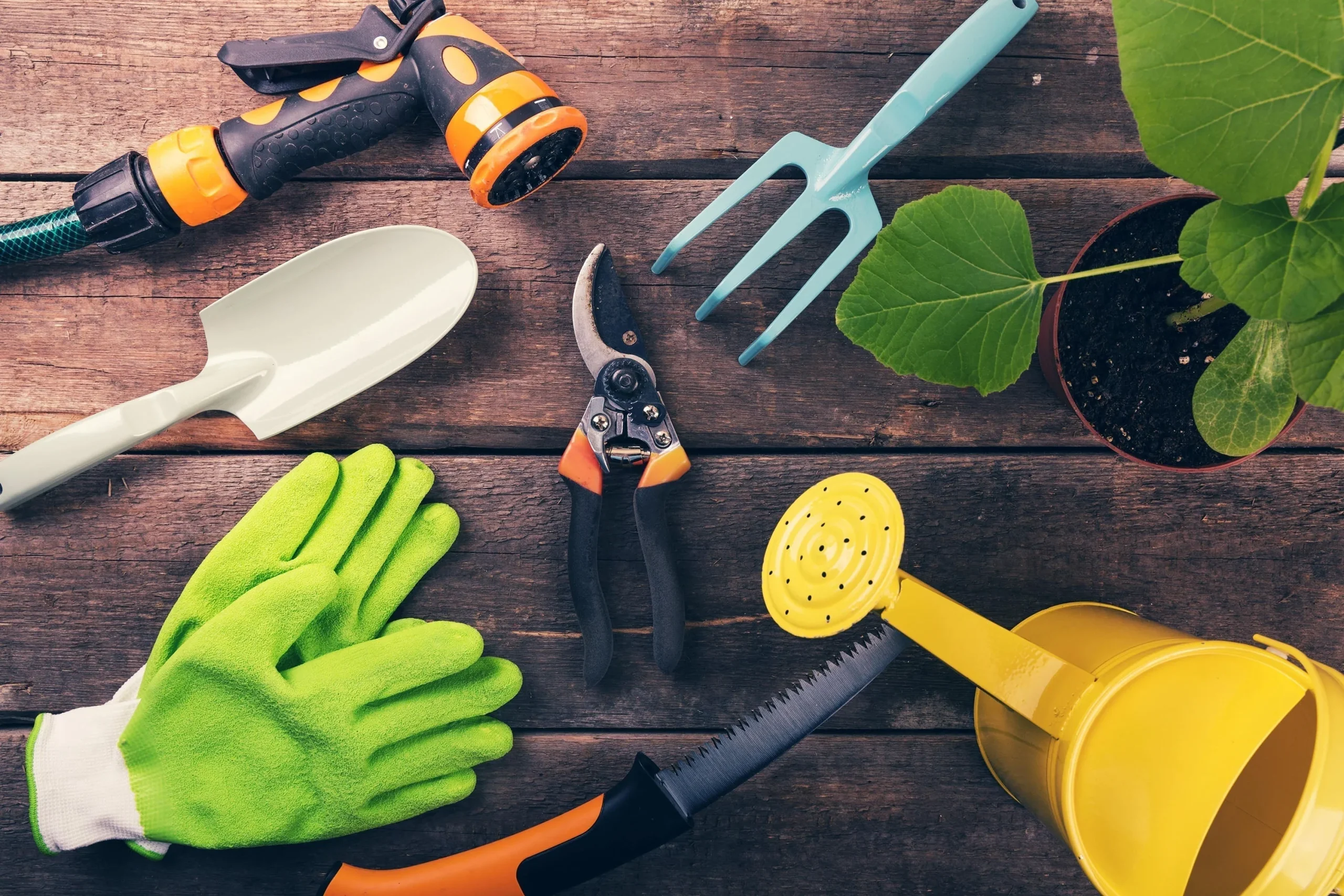
A small hand shovel (also called a spade) for detail work costs $15 to $25. A trowel (pointed, small scoop) is essential for planting and weeding. Trowels cost $5 to $20 depending on quality. Buy a quality trowel—cheap ones bend immediately.
Rake
A garden rake (not a yard leaf rake) has short, strong tines for breaking soil clods and leveling beds. A quality garden rake costs $25 to $40. A leaf rake is separate—it has long tines for gathering leaves. Many gardeners buy one or the other; some buy both.
Hoe
A hoe (various styles) is for weeding and breaking soil. A standard hoe costs $20 to $30. A warren hoe (pointed) works well for deep weeding. A dutch hoe works from standing position. Experiment with styles—preferences vary.
Garden Gloves
Good gloves protect your hands and make tools comfortable. Quality gloves cost $10 to $20 per pair and last a season. Cheap gloves tear and offer poor protection. Many gardeners buy several pairs for different tasks.
Watering Tools
A watering can is useful for small-scale watering and container plants. A can costing $20 to $40 is durable and comfortable. A garden hose is essential. A quality 50 or 75-foot hose costs $30 to $60 and lasts years. Cheap hoses kink and leak. Buy a good hose—you’ll use it often. A soaker hose (leaks water along its length) or drip irrigation system costs $50 to $150 but saves water and time watering.
Pruning Tools
Hand pruners (secateurs) are essential for cutting branches and stems. Quality pruners cost $20 to $40 and are crucial—cheap pruners crush stems instead of cutting them, damaging plants. A pruning saw (curved blade) handles larger branches. A pruning saw costs $20 to $50. Lopping shears (long handles) provide leverage for larger branches. Good lopping shears cost $30 to $70.
Wheelbarrow or Garden Cart
For moving soil, mulch, and compost, a wheelbarrow is valuable but optional. A quality wheelbarrow costs $50 to $120 and is durable. A two-wheel garden cart ($150 to $300) is easier to maneuver than a wheelbarrow but costs more. Many gardeners start without one and add it later if needed.
Kneeling Bench and Tool Belt
A kneeling bench ($30 to $60) helps your knees during hours of gardening. Some have handles for standing assistance—useful as knees age. A tool belt ($20 to $40) holds small tools while working, saving trips to get supplies. Neither is essential, but both improve comfort and efficiency.
Specialized Equipment
Soil testing kit ($25): identifies nutrient deficiencies and pH. Worth the investment for new gardens or problem areas. Compost bin ($50 to $200): accelerates compost production compared to open piles. Garden fence ($1 to $3 per linear foot): protects from deer and rabbits. Raised bed kit ($100 to $300): elevates gardening and improves drainage. Soil amendments cost $20 to $50 per large bag.
Quality and Maintenance
Invest in quality tools that outlast cheap alternatives. Stainless steel resists rust but costs more. Carbon steel tools rust if not dried but are slightly cheaper. Wooden handles age gracefully but need care. Fiberglass handles are durable but less pleasant to use.
Maintain tools: clean after use, dry before storage, sharpen pruners annually, oil metal parts. A tool well-maintained lasts decades; neglected tools rust or break in seasons.
Building Your Collection
Start with essentials: spade, trowel, hoe, hand rake, pruners, gloves, and hose. This costs $100 to $200 total. Add specialized tools as you expand your garden or identify specific needs. Avoid impulse purchases of gadgets you won’t use. A established gardener might own 30+ tools; a beginner needs 10.
Storage and Organization
Organize tools where you can find them. A simple wall rack in a shed or garage keeps tools visible and accessible. Hang tools by handles. Store soil amendments and pots together. Organization takes an hour initially and saves frustration continuously.
Conclusion
Quality gardening tools are investments lasting years or decades. Start with essential basics. Buy quality—the price difference between cheap and good is minimal over a tool’s lifetime. Maintain tools so they reward you with long service. Over time, you’ll build a collection of tools that make gardening easier and more enjoyable.
FAQs
1. Is a hoe worth buying?
Yes, if you garden regularly. A hoe saves your back by letting you weed from standing position. Hand weeding is fine initially; a hoe becomes valuable as gardens grow.
2. What’s the difference between a spade and a shovel?
A spade has a flat edge for digging and edging. A shovel has a curved edge for scooping. Both are useful; start with a spade for versatility.
3. Should I buy an expensive tool set?
No. Sets include tools you don’t need. Buy individual quality tools as you need them. This is cheaper and leaves you with only useful tools.
4. How often should I sharpen pruners?
Annually, or when you notice crushing instead of clean cuts. Dull pruners damage plants. Sharp pruners are essential.
5. Can I use household tools for gardening?
Avoid it. Household items aren’t designed for gardening and break easily. Gardening tools are inexpensive compared to frustration from broken equipment.